
Lake Lanier wildlife sailing: birds, eagles & fish you'll spot
On a still July morning near Two Mile Creek, I watched an osprey drop into the water beside my hull and come up with a shad flapping in its talons. My guests barely breathed. That is the appeal of lake lanier wildlife sailing: no engine noise, no wake, no rush. You drift close to birds, eagles, and fish that would flee a powerboat. Here is what you can actually see from my sailboat off Aqualand Marina, when to see it, and how families can make the most of a day out on the water.
Birds and raptors you spot during lake lanier wildlife sailing
From my sailboat off Aqualand Marina, guests spot 8 to 12 bird species on a typical half-day sail. Great blue herons stalk shorelines, double-crested cormorants surface-dive near coves, belted kingfishers rattle across the bow, and turkey vultures ride thermals over Buford Dam. Most guests arrive expecting one or two highlights and end up logging five or six species before the first hour is up.
The most common birds I point out to guests each week are great blue herons wading in shallows near Flowery Branch and Two Mile Creek. They stand still for minutes, then strike. Double-crested cormorants hunt in small groups, often visible surface-diving beside the hull. Osprey circle high before folding into 40-foot dives. Belted kingfishers zip along the shoreline hunting shad and small bass. Ring-billed gulls follow bait balls in open water.
Less common but memorable sightings include bald eagles overhead, red-shouldered hawks in the pine canopy, and the occasional common loon during winter migration. Georgia DNR maintains a shorebird checklist that covers what you can expect on inland lakes like Lanier.
Bald eagles and lake lanier wildlife sailing: peak nesting season
Georgia DNR documents 4 active bald eagle nesting territories in the Lake Lanier watershed, with confirmed sightings in every month of the year (georgiawildlife.com). There is a clear peak window for lake lanier wildlife sailing focused on eagles: late December through early April. That is when adult pairs work established nests, fledglings begin flying, and the leafless canopy makes big raptors easier to spot from the water.
I have sailed guests to eagle territory in every month of the year. Winter sightings are the most reliable because leaf-off conditions expose nests along the shoreline. Spring brings juvenile fledglings that are still learning to fish and often stay near the nest. Summer sightings depend on thermal patterns, but adults appear regularly above open water midmornings. Fall migration adds transient birds passing through Lanier on their way south.
Not every eagle charter works out the way I plan. In February 2024, I ran a 7 AM sail from Aqualand Marina with four guests who had driven up from Atlanta specifically for eagles. A cold front had cleared two nights before, and by 8 AM every large raptor was tucked deep in the pine canopy. We logged one adult bird at roughly 400 yards and two juvenile red-shouldered hawks at closer range. That morning changed how I approach eagle-focused lake lanier wildlife sailing trips: I now always build in secondary targets so guests leave with 10 or more species on their list even when the raptors do not cooperate.
For families planning a lake lanier wildlife sailing day around eagles, I recommend booking a morning half-day between December and March. If you also want fall foliage as a backdrop for other raptor viewing, our fall foliage sailing guide covers the best weeks. I check the weather.gov Buford Dam forecast before every morning eagle sail to time the post-front clearings that push raptors into open flight.
Fish and aquatic life visible from the sailboat hull
Lake Lanier supports over 30 recorded fish species according to U.S. Army Corps of Engineers fishery surveys, including largemouth bass, striped bass, spotted bass, black crappie, white crappie, bluegill, redear sunfish, and channel catfish. On clear-water days near Two Mile Creek and Browns Bridge coves, you can watch schools of shad push right up against my sailboat hull.
Clarity varies by season. Spring rains bring runoff that clouds the water for a week or two, but by early summer the mid-lake stretches near Dock Zk return to 6 to 10 feet of visibility. That is when guests with polarized sunglasses start pointing out fish shapes below the waterline.

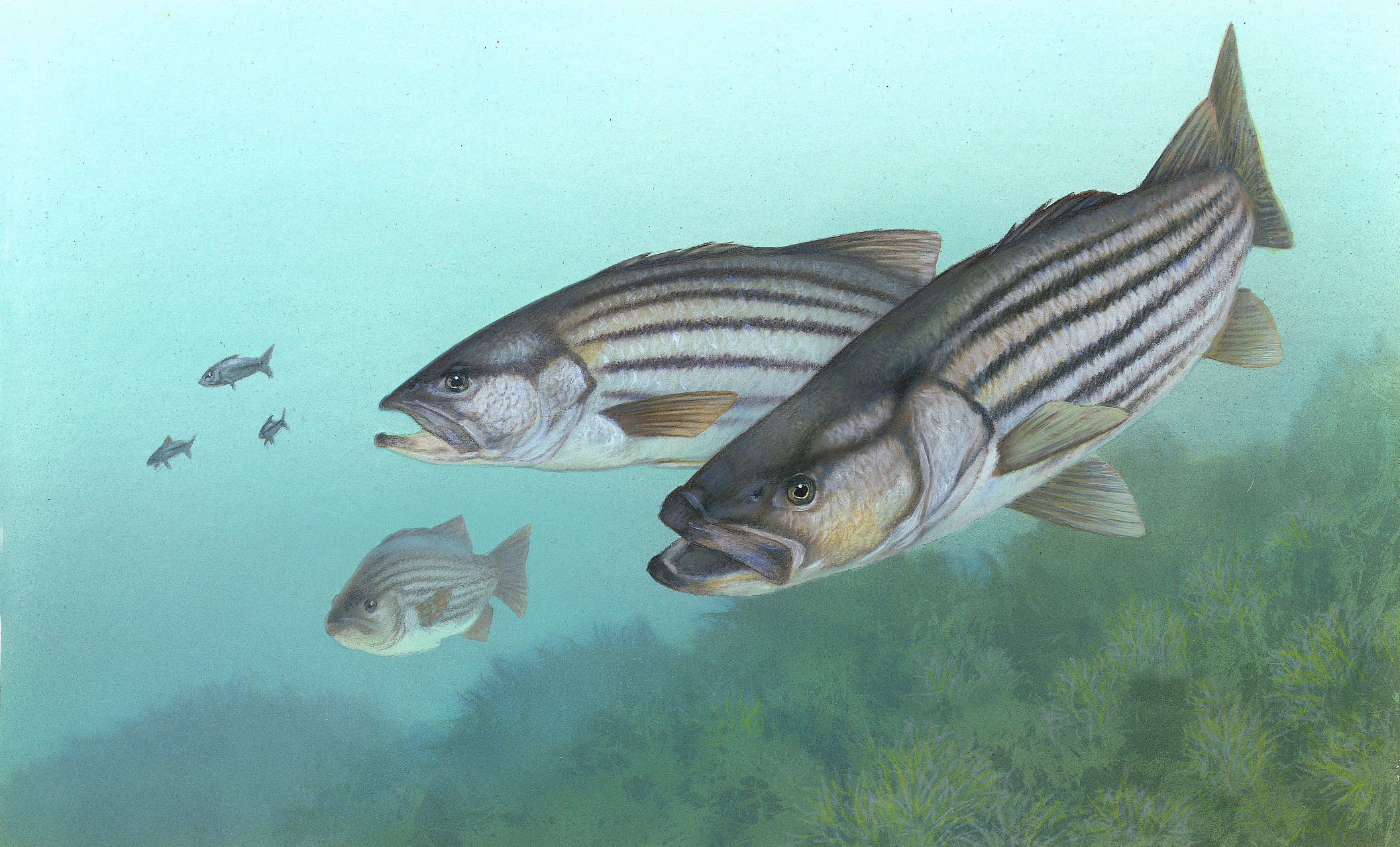
Striped bass are a Lake Lanier signature and the most-requested fish sighting guests bring up before a lake lanier wildlife sailing trip. The species was originally stocked and is managed as a game fishery by Georgia DNR. During summer, deep-water thermoclines push them down, but morning and dusk surface feeds are visible from the deck. The Lake Lanier Association tracks water quality reports that also flag algal or thermal events affecting fish visibility from a slow-moving hull.
Why a quiet sailboat beats a powerboat for lake lanier wildlife sailing
A sailboat under wind moves at 3 to 5 knots with almost no acoustic signature and no wake. A powerboat at cruising speed throws a wake, engine noise, and an exhaust plume that clears wildlife off the shoreline before you arrive. This is why lake lanier wildlife sailing feels fundamentally different from a powerboat trip: you drift close instead of scaring animals away.
The acoustic difference matters more than most first-time guests expect. Herons flush at a documented flight-initiation distance that powerboats commonly hit at 200 to 300 feet. A drifting sailboat often gets within 75 to 100 feet before the bird notices, which is a real proximity gain for photography and observation.
| Factor | Sailboat (drifting) | Pontoon boat | Powerboat |
|---|---|---|---|
| Engine noise at approach | None | Constant idle | High |
| Wake at wildlife shoreline | Minimal | Moderate | Large |
| Wildlife flight-trigger distance | 75-100 ft | 150-200 ft | 200-300 ft |
| Approach distance to herons and eagles | Close (photo range) | Medium | Distant (binocular range) |
| Shoreline covered per hour | 3-5 miles | 8-12 miles | 15-25 miles |
The wake matters too. Powerboat wakes wash bait fish out from under overhanging vegetation, disrupting the shore-hunting patterns of ospreys and kingfishers. When I sail past a shoreline under wind only, the animals behave as if I were not there. Guests see behavior, not startle responses. If this is your first time on a boat like mine, first time on a sailboat what to expect walks you through the basics of the day.
What families and kids should bring for a nature-focused sail
Guests who bring their own 7x35 or 8x42 binoculars on a lake lanier wildlife sailing charter typically identify 3 to 4 more species per half-day than those sharing loaners. Add polarized sunglasses to cut water glare, a bird ID app like Merlin, a wide-brim hat, reef-safe sunscreen, and a waterproof phone pouch.
I keep a couple of loaner pairs aboard, but compact roof-prism binoculars in the 7x35 range track moving birds far better than my loaners, especially for smaller kids on a moving hull. Our gear list post and our family charter guide cover age-appropriate expectations and packing for a lake lanier wildlife sailing day.
Georgia summers push heat indexes past 95 on the water. Pack twice as much water as you think you need, and check regional conditions at Explore Georgia before the drive up from Atlanta. For younger kids I limit direct-sun exposure to 20 minute stretches with breaks in the shaded cabin area of the boat.
Seasonal patterns that shape lake lanier wildlife sailing
Lake lanier wildlife sailing follows four distinct phases, with bird species counts peaking at 30-plus per half-day sail from March through May. Spring migrants and nesting residents crowd the shoreline, summer osprey hunts dominate open water, fall waterfowl arrivals add new targets, and winter leaf-off puts bald eagles in plain sight from the cockpit.
March through May delivers the highest species count of any lake lanier wildlife sailing season. Warblers and thrushes migrate through, herons pair up, ospreys return from wintering grounds, and largemouth bass move into shallow spawning beds near Flowery Branch. Water clarity fluctuates with spring rains, but a 30-plus species count in a single half-day more than compensates.
Summer heat settles in by June and pushes mid-lake bass into the thermocline. Ospreys hunt shad in visible surface strikes near Aqualand Marina and Two Mile Creek. Bass move deep in mid-day but surface feed at dawn and dusk. Non-venomous water snakes sun on rocks near coves and turtles bask on downed logs. For striped bass, this is the peak surface-feed window.
Fall migration runs September through November and puts the widest species mix of the year on the water. Warblers and thrushes push south, geese and ducks arrive in October, and bass move back to nearshore structure as water cools. This is my personal favorite window for guests who want both scenery and species density in one sail.

December through February is leaf-off eagle season. Adult eagles work nests, juveniles fledge in late winter, and the sparse canopy makes every big raptor visible from a mile away. Cold sailing days, but great viewing days. My month-by-month sailing guide breaks down which weeks offer which species so you can plan around your target list.
Frequently asked questions
What time of day is best for lake lanier wildlife sailing?
Dawn to about 9 AM and 6 PM to sunset are your two best windows. Wildlife is most active in cooler light. Fish surface-feed on baitfish schools, ospreys hunt actively, and herons work shorelines when the sun angle is low. Mid-day heat pushes most animals into shade or deep water. Georgia DNR notes that peak bird activity aligns with the two hours after sunrise and the two before sunset across freshwater lakes in the state. For a July or August charter, I recommend a 7 AM departure or a 5 PM sunset sail from Aqualand Marina.
Can kids handle a sailboat charter focused on wildlife?
Yes, and most kids love it. My boat carries up to 6 guests. I have had children as young as 4 on wildlife sails, and the quiet motion of a sailboat is easier on kids than a powerboat's noise and bounce. What matters most is bringing binoculars sized for small hands, sunscreen and a hat, and setting expectations that quiet moments produce the best sightings. Georgia DNR family-nature guides cover kid-appropriate viewing tips. For more on family charters, our family guide covers ages and pacing on longer sails.
Do I need my own binoculars, or does the boat provide them?
I keep a couple of loaner pairs aboard, but they are shared and not tuned for smaller kids. Guests who bring their own get much more out of the trip. A 7x35 or 8x42 pair is ideal for on-water use because higher magnification helps you see eagle detail across a cove without shaking. Georgia DNR viewing guides recommend that range for lakeside birding. Bird identification apps like Merlin also help. Polarized sunglasses double as fish-spotting tools by cutting surface glare on Lake Lanier clear-water mid-lake stretches near Dock Zk.
What season has the most bald eagle activity on Lake Lanier?
Late December through early April is the standout window. Adult pairs are working established nests, chicks hatch in February or March, and juveniles fledge in April or May. The leafless canopy in winter also makes eagles much easier to spot in the pine and hardwood shoreline. Georgia DNR documents active nesting territories in the Lanier watershed and reports year-round presence, but winter is when the odds and visibility align. I plan most eagle-focused charters between January and March out of Aqualand Marina.
Are there protected wildlife areas around Lake Lanier?
Lake Lanier itself is a U.S. Army Corps of Engineers reservoir, and shoreline management includes wildlife protection zones. Georgia DNR coordinates with USACE on eagle nest buffers, and boaters are asked to maintain distance from active nests during nesting season. On sailing charters, I stay well outside those buffers by design because sailboats move slowly and eagles are more relaxed when they do not feel pursued. The Lake Lanier Association publishes updated protected-zone maps each season, which I review before every winter eagle-focused charter.
How does a sailing charter compare to a pontoon or powerboat for wildlife viewing?
A sailboat is quieter, wakes less, and moves slower, and all three factors matter for wildlife proximity. Pontoons run engines constantly for propulsion and steering; sailboats can drift silently once the sails catch wind. The result is closer approach distances without triggering flight responses in herons, eagles, or ospreys. That said, powerboats can cover more shoreline in the same time. For dedicated wildlife trips, sailboats win on quality of encounter. Georgia DNR wildlife-viewing guides recommend slow, quiet approaches for exactly this reason on freshwater lakes.