
Sunset sailing Lake Lanier: evening light, views, and timing
The best hour on Lake Lanier is not noon. It is the last ninety minutes before the sun drops behind the ridgeline west of Buford Dam, when the water turns copper and the wind finally settles. Sunset sailing Lake Lanier season runs April through October, and the timing shifts almost three full hours across those seven months. Here is exactly when to book, what to pack, and how I route the boat to keep the sun on the bow.
When to time your sunset sailing Lake Lanier charter from April to October
Sunset launch times on Lake Lanier shift almost three hours across the April through October season. In late June the sun sets near 8:50 PM behind the western ridgeline. By early October it drops before 7:00 PM. I typically cast off ninety minutes before sunset from Dock Zk at Aqualand Marina, which puts guests on the water for the entire golden hour.
The single biggest booking mistake I see is guests picking a launch time based on when the sun sets in July, then trying to keep that same 6:30 PM launch in late September. By then the light is already fading before the sails are up. Check the actual NOAA sunset time for your date at Gainesville, Georgia and work back ninety minutes.
I made that mistake myself in September 2021 on a sunset sailing Lake Lanier anniversary charter. I launched at 6:45 PM from Dock Zk using a July mental model, and by the time we cleared Two Mile Creek and reached the main basin, the gold was gone. The couple was kind about it. I cut the rate in half and rebooked them the following Saturday at no charge. I have not used a July launch time in September since. Now I pull the NOAA solar table for the specific date before confirming any booking after Labor Day.
Here is how sunset times shift across the season on Lake Lanier, using published solar data for Gainesville, GA:
A sunset sailing Lake Lanier trip in April feels different from one in September, even though the light works the same way. April sunsets carry the last cool air of spring; September sunsets sit inside warm humid evenings that pull mist off the water after dark.
Why couples and photographers pick sunset sailing Lake Lanier over midday runs
Evening wins over midday on Lake Lanier for photographers and couples for the same reason: declining sun angle, falling temperature, and clearing boat traffic all arrive in the same two-hour window. Midday delivers glare above 5000K, wakes from rental traffic, and 95-degree heat. By the time the sun approaches the western ridgeline, all three problems have cleared.
Photographers care about direction, angle, and color temperature. Golden hour, the 60 minutes before sunset, drops the sun's color temperature from around 5500K to about 3000K, giving skin tones and sails a warm cast that is impossible to reproduce at noon. Read more about how the sunset cruise became Atlanta's favorite anniversary tradition.
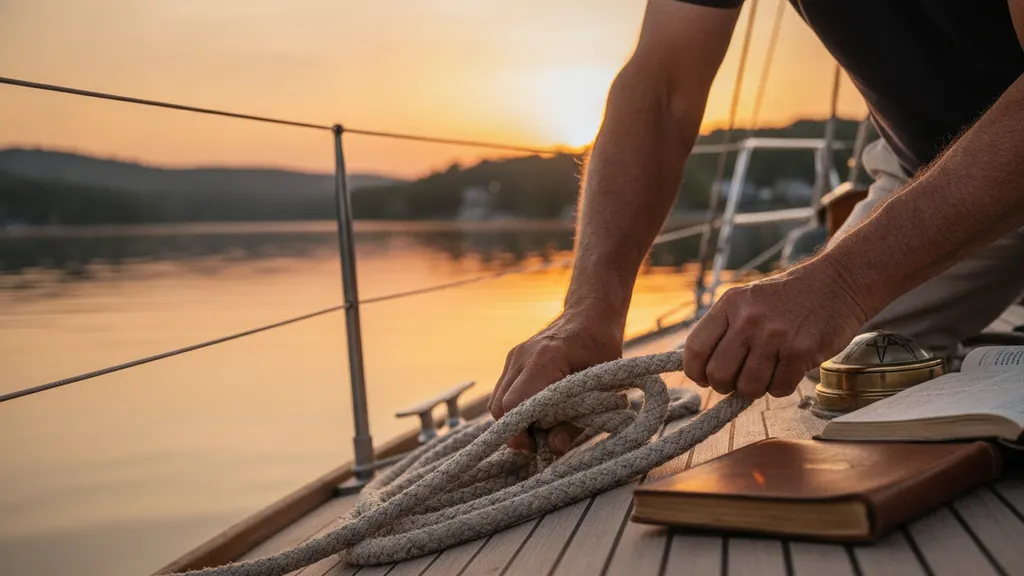
Couples pick sunset for a different reason. A midday charter is an activity; a sunset sail is a setting. The boat becomes the reason the evening feels different from a dinner reservation. If you are marking an anniversary or a proposal, book the last ninety minutes of daylight, not the middle of the afternoon.
Wildlife also shows up better at dusk. Great blue herons wade the shoreline near Two Mile Creek, and osprey work the fish that rise to feed as light drops. The Georgia Department of Natural Resources wildlife guide catalogs species that concentrate along Lake Lanier's western shore in evening hours.
How wind and waves shift on Lake Lanier for an evening sail
Wind on Lake Lanier follows a predictable daily cycle in the sailing season. Morning is often glassy. Afternoon thermals build as the land heats up faster than the water, peaking around 3 to 4 PM. By 6 PM those thermals collapse and the wind steadies at 5 to 10 knots from the west or northwest, which is exactly what a sailboat wants.
This means a sunset sailing Lake Lanier charter often gets the best conditions of the entire day. Not the strongest wind, but the most consistent. The chop from ski boats and pontoons drops off after 6 PM as most rental traffic returns to the marina. What is left is smooth water and a steady breeze.
The chart below shows how average wind speed on inland Southeast lakes shifts across a typical summer afternoon and evening, drawn from published NOAA wind pattern guidance:
Weather can change fast, especially in June and July when pop-up thunderstorms build over North Georgia. I watch the Peachtree City NWS radar starting at 3 PM on the day of any evening charter. If a cell is tracking toward Lake Lanier, we move the launch earlier or reschedule.
What to pack for an evening Lake Lanier charter
An evening charter needs a different pack than a midday one. The main difference is temperature drop. Air over Lake Lanier typically falls 10 to 15 degrees in the ninety minutes after the sun sets, and once you are sitting still under sail, that shift feels bigger than it sounds. Bring a layer even in July.
Here is a fast comparison of what changes between a midday and a sunset sailing Lake Lanier packing list:
| Item | Midday charter | Sunset charter |
|---|---|---|
| Sunscreen | SPF 50, reapply hourly | SPF 30 for launch, done by 7 PM |
| Layer | Optional | Windbreaker or light fleece required |
| Hat | Wide brim | Cap with chin strap; brims block sunset views |
| Light source | Not needed | Phone flashlight or small headlamp |
| Shoes | Deck shoes | Deck shoes, closed toe after dark |
| Camera | Polarizer helpful | Fast lens or phone night mode |
Bring water. Even at 75 degrees, three hours on the lake with steady wind pulls moisture out of you faster than you feel. My full charter packing list, which I hand every guest, is in the post on what to pack for a Lake Lanier sailing charter. One item most guests forget: a windbreaker with a hood. Once the sun is below the ridgeline and you are under sail crossing open water past Browns Bridge, the apparent wind pulls another 3 to 5 degrees off the felt temperature. A shell fixes that instantly.
How I route the boat to keep the sun on the bow
Route planning for a sunset sail starts with the lake's geography. Lake Lanier's main basin trends northwest to southeast, which means from Aqualand Marina at the northern end, an outbound sail toward Browns Bridge points you almost directly at the setting sun for most of the season. That is not luck; the USACE reservoir survey and navigation charts show why.
Lake Lanier covers 38,000 surface acres and holds 692 miles of shoreline across Hall, Forsyth, Gwinnett, and Dawson counties in North Georgia. The U.S. Army Corps of Engineers impounded the Chattahoochee River at Buford Dam, completing the project in 1956 to supply water to the Atlanta metropolitan area and generate hydroelectric power for the region. The reservoir surface sits at approximately 1,071 feet above mean sea level, which keeps water temperatures lower through summer than flatland lakes at the same latitude. The main navigable channel runs about 44 miles from Buford Dam north toward the confluence of the Chestatee and Chattahoochee rivers. That northwest-to-southeast axis is what makes Dock Zk at Aqualand Marina the right launch for sunset sailing Lake Lanier, facing nearly due west at the golden hour with the Buford Dam ridgeline as the natural timing horizon for the light.
My standard sunset run leaves Dock Zk about 90 minutes before sunset. I head out through the mouth of Two Mile Creek, turn southwest into the main basin, and hold that heading until the sun sits about 15 degrees above the ridgeline. Then I turn the boat broadside to the light so guests along both rails get an unbroken view.
For guests who want more shoreline detail on the way back, I cut past the north side of Aqualand and pick up landmarks toward Flowery Branch. Full route notes are in my post on Lake Lanier sailing routes and landmarks.
The last twenty minutes of a sunset sailing Lake Lanier trip are the ones guests remember. Sails silhouetted against pink and orange sky. Water flat as a plate. That is when I drop the pace, ease the sheets, and let the boat drift so nobody has to hold a camera and a wine glass at the same time.
Frequently asked questions
What time should we book a sunset sailing Lake Lanier charter in July?
In July, sunset over Lake Lanier lands between 8:45 PM and 8:50 PM for most of the month, per NOAA sunset data for Gainesville, Georgia. I recommend a 7:00 PM to 7:30 PM launch out of Aqualand Marina, which puts you on open water for the last ninety minutes of daylight and the twenty-minute afterglow. Booking any earlier means you burn the best light motoring out. Booking any later means you miss the golden-hour window and only catch the last of the color. A 7:15 PM launch is the sweet spot for July evenings on the lake.
How cold does it get on Lake Lanier after the sun goes down?
Air temperature over the lake typically drops 10 to 15 degrees in the ninety minutes after sunset, per National Weather Service data. On a 92-degree July afternoon, you might be at 78 by 9:30 PM. On a 75-degree September evening, you can be in the low 60s within an hour of the sun going down. Add wind chill from a 6 to 8 knot breeze under sail, and the felt temperature falls another few degrees. A light windbreaker or fleece pullover in your bag makes the difference between comfortable and cutting the sail short.
Can we bring wine and snacks on a sunset sail?
Yes. Lord Nelson Charters is BYOB and you are welcome to bring wine, beer, cheese boards, and light dinner. Sunset sails often work best with something simple that does not need a table, since the boat is under sail and the deck has some motion. Full details on what is allowed and how to bring it are in my post on the BYOB boat charter policy on Lake Lanier. Please keep glass secured in a soft cooler and pack out anything you bring aboard. Guests handle their own beverages; I handle the boat.
Is a sunset charter a good idea if I have never sailed before?
It is one of the best introductions to sailing on Lake Lanier. Evening wind is steadier and softer than midday, per NOAA wind pattern guidance. Boat traffic is lighter, so the ride is smoother. You are seated most of the time, taking in the view, rather than being asked to help work the sails. If you want to actually learn how a sailboat moves, book a daytime lesson instead. But if you just want a peaceful first sail, sunset wins.
What is the difference between a sunset sailing Lake Lanier charter and a sunset dinner cruise?
A sunset sail is a private sailboat with wind in the sails, quiet water under the hull, and space for up to six guests. A dinner cruise, by contrast, is a large motor pontoon or yacht with a buffet, background music, and forty or more strangers on board. If you want a quiet, private, romantic sail with your own group, a sunset sailing Lake Lanier charter is the right pick. If you want a full sit-down meal served to your table with entertainment, look at one of the pontoon dinner operators, per Explore Georgia's Lake Lanier listings.
How do you decide whether to cancel a sunset sail for weather?
I check three things the day of the sail: the Peachtree City NWS radar starting at 3 PM, the Lake Lanier surface forecast, and lightning within 20 miles. If a storm cell is tracking toward the lake with an arrival window overlapping the sail, I move the launch earlier or reschedule. Cancellation calls come from me, not from you, and are always free. Steady rain without lightning is workable if guests want to go; wind above 20 knots or any lightning is a hard cancel. The full protocol is in my post on Lake Lanier sailing weather.