
Lake Lanier thunderstorm safety: when captains delay a charter
A summer afternoon at Aqualand Marina can look flawless from Dock Zk while a line of cells is already stacking up west of Buford Dam. That gap between what you see and what is coming is the whole reason Lake Lanier thunderstorm safety drives charter timing more than wind, heat, or anything else on my list. I would rather push your departure by an hour than put you on open water under a building anvil cloud.
Why Lake Lanier thunderstorm safety starts before you leave the dock
Because the call that actually protects you gets made on land, usually inside a 30 minute window before your scheduled departure. Once we are past Browns Bridge with the main up, the options narrow fast and the lake gets wide. Lake Lanier thunderstorm safety is a departure question first and a sailing question second, settled in the hour before your slot.
I have sailed out of Aqualand Marina for more than twenty years, and the July pattern rarely changes. Mornings are calm and clean, with the wind barely enough to fill a sail before nine o'clock. By mid afternoon, heat and humidity stack cells over the higher ground to the west, and they slide across the open water between Flowery Branch and Two Mile Creek with very little warning. In a typical July I count storm activity on somewhere between twelve and fifteen afternoons out of the month, almost all of it clustered between two o'clock and seven o'clock, which is exactly why our afternoon charters carry more schedule flexibility than our morning ones. The National Weather Service thunderstorm safety guidance is blunt about why that matters: storms can throw dangerous lightning, strong winds, and hail even when skies nearby appear clear.
That last part is the one guests push back on. You are standing on the dock, the sun is out, the water is glass, and a one hour hold feels like an overreaction. But NOAA treats lightning as a serious hazard around lakes and other open outdoor areas, and a charter sailboat is exactly that situation: no roof, no grounded structure nearby, and a tall metal mast standing above everything. If you want the longer version of how I read a forecast day by day, I walk through it in our guide to Lake Lanier sailing weather.
There is a full breakdown of this topic in Winter Sailing on Lake Lanier: A Captain's Cold Weather Guide.
What weather signals can trigger a charter delay or cancellation
Four things move a departure: thunder you can hear, lightning you can see, a severe thunderstorm warning covering Hall or Forsyth County, and a visible gust front rolling in from the west. Any single one of them keeps the boat tied up until the sky settles down.
Notice what is missing from that list. Lake Lanier thunderstorm safety does not hinge on whether rain is falling. Rain is a comfort issue, and a light shower on a warm afternoon is often the nicest part of a sail. Wind and electricity are the hazards. The lake itself is federal water managed by the US Army Corps of Engineers, and conditions on it can shift quickly once a cell gets organized, so I watch the current National Weather Service forecasts and warnings for north Georgia rather than trusting a phone app summary.
| Signal at the dock | What it usually means | Likely call |
|---|---|---|
| Thunder you can hear | Lightning is already within range | Hold at the dock and restart the 30 minute clock |
| Severe thunderstorm warning for Hall or Forsyth County | Damaging wind or hail is expected | No departure until the warning expires |
| Dark line of cloud building to the west | An outflow gust may cross open water | Delay, or shorten the route and stay close in |
| Steady rain, no thunder, light wind | Comfort issue only | Sail as planned and bring a layer |
How lightning risk changes Lake Lanier thunderstorm safety on an exposed sailboat
A sailboat concentrates the risk instead of spreading it, and a gust front can lay one over in under 30 seconds once the wind line arrives. You are on flat open water with an aluminum mast above you and nothing taller for a long way in any direction. That geometry is why Lake Lanier thunderstorm safety reads differently on a sailing charter than it does on a shoreline picnic.
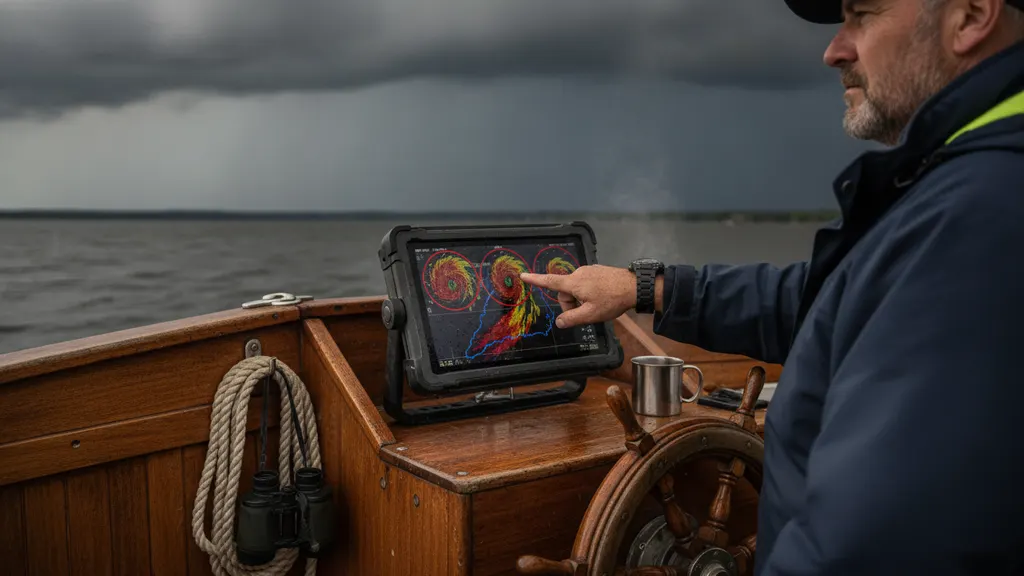
The National Weather Service lightning safety guidance gives two safe answers when thunder starts: get inside a substantial building, or get inside a hard topped vehicle. A 30 foot sailboat under sail is neither, and no amount of experience changes that. The guidance also sets the restart rule I follow without negotiation, which is a wait of at least 30 minutes after the last thunder before anyone resumes outdoor activity. On Lake Lanier that rule rarely plays out as a single clean half hour. A cell that drops one clap of thunder and moves off is the exception, not the rule, and I have logged plenty of afternoons where a second rumble at the twenty minute mark reset the clock and turned a 30 minute hold into something closer to an hour by the time everyone was back aboard.
Wind is the quieter half of the problem. A gust front arriving ahead of a cell can hit hard enough to lay a boat over before the sails come down, and that is the moment loose gear and loose people become the story. Training groups like American Sailing teach reefing and heavy weather handling for a reason. For the legal baseline that applies to every boat on this lake regardless of weather, read our breakdown of Lake Lanier boating safety.
What should guests do when a captain changes the itinerary
Take the new plan at face value and stay flexible for the next hour. A delay is not a cancelled day. Most storm holds end with a shifted departure, a shorter route, or a swap to a different window, and your part is simply staying reachable and ready to board.
Three things help more than anything else. Keep your phone on and answer it, because I call rather than text when a decision is close. Keep the group together near the marina instead of scattering to restaurants in Flowery Branch. And say yes to a shortened route if I offer one, because staying inside the coves near Two Mile Creek often turns a lost afternoon into a good two hour sail. The Coast Guard boating safety office is clear that the go or stay decision belongs to whoever is running the boat, and good Lake Lanier thunderstorm safety practice means guests do not get a vote on that one call.
It also helps to pack for a wait. Water, a light rain layer, and something for the kids to do turn a dock hold into a non event. The Lake Lanier Association publishes useful background on conditions and lake stewardship if you want reading material, and our list of what to pack for a Lake Lanier sailing charter covers the rest.
How to build Lake Lanier thunderstorm safety into your charter booking
Book the time of day and the time of year that fight storms instead of inviting them, then leave slack in the schedule around your sail. Lake Lanier thunderstorm safety is much easier to manage when your plan does not depend on a single immovable two hour block.
Morning departures are the strongest move in high summer. Heat driven cells build later in the day, so a departure that clears Aqualand Marina early is usually done before anything organizes. Shoulder months work too, and our guide to the best time to sail Lake Lanier lays out how April and October compare to July. If your date is tied to an event, reserve early and tell me that up front, which is the main argument in our Lake Lanier charter booking timeline.
Two other habits pay off. Ask about rescheduling in writing before you pay, so nobody is guessing later. And come prepared for the baseline rules that apply in any weather, including the gear and operator requirements published by the Georgia Department of Natural Resources boating program. If you want to understand the sailing side of the decision rather than just the safety side, the seamanship resources from US Sailing explain why captains treat forecast wind and lightning as hard limits rather than preferences.
There is a full breakdown of this topic in Lake Lanier sailing charter for beginners: a first-timer's guide.
Frequently asked questions
Does rain affect Lake Lanier thunderstorm safety?
Rain by itself usually does not cancel anything. A warm summer shower on Lake Lanier is a comfort problem, and most guests are fine with a few minutes of it. Thunder and lightning sit in a different category, and that distinction is the core of Lake Lanier thunderstorm safety. The National Weather Service thunderstorm safety page explains that storms carry dangerous lightning, strong winds, and hail, so the trigger for holding a departure is electrical activity and wind, not precipitation. If the radar shows plain rain moving through, expect to sail. If it shows thunderstorms, expect a hold at the dock until the cell clears.
How long do you have to wait after thunder before going back out on the water?
Thirty minutes from the last rumble you hear. The National Weather Service lightning safety guidance says to wait at least 30 minutes after the final thunder before resuming outdoor activity, and that clock restarts every time thunder sounds again. On open water the rule has real teeth, because getting from the middle of the lake back to Aqualand Marina takes time of its own. In practice a single passing cell can hold a departure for 45 minutes to an hour once you add the required wait and the walk back down to Dock Zk.
Can a thunderstorm reach Lake Lanier when the sky above the marina looks clear?
Yes, and it surprises people every season. The National Weather Service states that thunderstorms can produce dangerous lightning, strong winds, and hail even when skies nearby appear clear, which is why Lake Lanier thunderstorm safety relies on radar and warnings rather than a look up at the sky. Cells building over the higher ground west of Buford Dam can push an outflow gust across open water well ahead of any visible cloud. NOAA also treats lightning as a serious hazard around lakes and other open outdoor areas, so a blue patch overhead is not clearance to leave the dock.
What happens to my booking if weather stops the sail?
Ask Captain John directly before you pay, because the answer depends on the date, the boat, and how far ahead you reserved. What holds true generally is the shape of it: most weather problems move a departure rather than erase a day, and a morning or sunset window often opens inside the same week. Put the question in writing when you book so expectations are clear on both sides. The Coast Guard boating safety office makes the broader point well, which is that the decision to go or stay belongs to the operator, and a reschedule always beats a bad outing.
Is a sailboat a safe place to be in a lightning storm?
No, and no honest captain on this lake will tell you otherwise. The National Weather Service lightning safety pages name two safe places during a storm: a substantial enclosed building and a hard topped vehicle. A sailboat is neither. It sits on open water with an aluminum mast standing as the tallest object for a long way in any direction, which is the reason Lake Lanier thunderstorm safety gets handled as a scheduling decision rather than an onboard procedure. If thunder starts while we are out, the plan is simple: everyone off the rail, under cover where possible, and straight back toward the nearest dock.
When does Lake Lanier thunderstorm safety matter most during the year?
Afternoon and early evening through the summer months, which is why I steer weather sensitive groups toward morning departures from June into August. Heat and humidity build through the day, and the cells that form inland tend to drift over the lake later. The National Weather Service publishes daily forecasts and warnings for north Georgia that describe the day's setup far better than any seasonal rule of thumb, so check them the morning of your sail. The Georgia Department of Natural Resources boating pages are also worth reading before any trip, whatever the sky happens to be doing.