
Lake Lanier photography charter: plan better photos on the water
On Lake Lanier the best light of the day usually lands between Aqualand Marina and Browns Bridge about forty minutes before sunset, when the water goes flat and the sky turns copper. A Lake Lanier photography charter is simply a way to be out there at that hour, on a sailboat you control, instead of shooting from a crowded dock. Here is how I plan those sails, and what photographers should bring.
What a Lake Lanier photography charter gives you that a rental cannot
A Lake Lanier photography charter is a private sailing trip booked specifically to shoot portraits, engagements, or landscapes with the lake as a backdrop, with a licensed captain handling navigation so the photographer never has to put the camera down. This setup puts a captain at the wheel while you shoot, which means someone else watches traffic, depth, and wind while you change lenses. You choose the backdrop, the heading, and the hour. On a rented pontoon the person holding the camera is also the person driving, and both jobs suffer.
Scale is the part people underestimate. The U.S. Army Corps of Engineers Mobile District, which manages Lake Sidney Lanier, reports more than 39,000 surface acres at full level and 57 park areas around the shoreline. The difference between a pine ridge, a bare clay bank, and an open horizon with nothing in it is a ten minute sail rather than a forty minute drive. Near Browns Bridge the shoreline runs to pine, which holds its color until the light is nearly gone, while the open water toward Buford Dam gives you a clean horizon with nothing behind the subject at all. A cove near Flowery Branch reads differently again, with lower banks and calmer water on most evenings. Which stretch earns the sail depends entirely on what you want behind the subject, and that choice is only available to you if the boat can actually get there before the light turns. I keep a longer breakdown of which shores read well on camera in our guide to Lake Lanier sailing routes, islands, and scenic shores.
The other difference is exclusivity. A private boat has no strangers in the background, and nobody walks through the frame at the moment the light lands. For engagement and anniversary work that matters more than any lens choice, which is why this kind of trip is almost always booked as a private sail rather than a shared one.
| Setup | Who is driving | Backdrop control | Best for |
|---|---|---|---|
| Private sailing charter | Captain John | High: pick the cove, heading, and hour | Portraits, engagements, brand work |
| Rented pontoon | You | Low: one hand on the camera, one on the wheel | Casual family snapshots |
| Shoreline park | Nobody | Medium: fixed angle, public foot traffic | Large groups on a budget |
Two kinds of shoreline backdrop, counted by the Corps of Engineers: developed park land you can shoot toward, and marina structure you can shoot from.
Light, angles, and water: timing a Lake Lanier photography charter
Shoot the first ninety minutes after sunrise or the last two hours before sunset. Midday sun on open water is the hardest light on this lake, because it falls straight down and then bounces back up off the surface, so faces get lit twice and squint once. Low sun fixes both problems.
Direction matters as much as timing. Sailing west toward Buford Dam in the evening puts the sun behind your subject, which gives you rim light on hair and a bright wake, but it also means flare and a dark face unless you add a reflector or expose for skin. Turning the boat ninety degrees changes all of that in under a minute. Check sunrise, sunset, and civil twilight for your date with the NOAA Solar Calculator, because the useful window moves nearly two hours between June and December.
Water surface is the second half of the picture. The lake is busiest on summer weekend afternoons, and boat wakes turn the surface into chop that kills reflections. Early morning is when you get glass. Evening is when you get color. A late afternoon Lake Lanier photography charter usually catches both as traffic thins out after five, and our sunset sailing guide goes deeper on evening timing.
Sails are props, not obstacles. A white main lit from behind becomes a softbox, and the shadow it throws on the foredeck is the most useful shade on the boat. American Sailing's instructional library on points of sail explains the terms in plain language, which helps if you want to ask for a specific trim instead of a specific spot.
How to protect cameras and lenses on a Lake Lanier photography charter
Assume spray, assume movement, and carry less than you think. One body with a 24 to 70 and a second with an 85 covers almost everything out here. A dry bag that actually closes, a microfiber cloth in a pocket, and a lens hood do more good than a third body ever will.
Lake Lanier is fresh water, so spray will not corrode gear the way salt does, but silt and sunscreen still smear glass. Keep the camera strapped across your body rather than around your neck, because a boat heeling fifteen degrees makes a loose camera swing into the coaming. Tripods are mostly useless under sail. The deck moves, so you buy sharpness with shutter speed instead, 1/500 and faster for anything handheld on a long lens. A clear filter on the front element is cheap insurance against both, and a quick wipe with a dry corner of the cloth between shots keeps the glass clean without working grit into the coating. Between setups, the camera goes back in the dry bag rather than on a seat cushion, because a gust can tip an unattended body into the bilge faster than anyone can catch it. Batteries run down faster in the wind and cold than photographers expect, so I tell guests to carry a spare.
Everyone aboard wears or carries a life jacket, and the U.S. Coast Guard Office of Boating Safety sets the baseline every charter follows. Georgia adds its own rules through the Georgia Department of Natural Resources Wildlife Resources Division, including where passengers may legally sit while under way. Standing on the bow pulpit with your back to the water is not one of those places. A charter like this still has rules, and I enforce them.
Clothing matters for gear too. Soft fabrics do not throw color onto faces, and non marking soles do not scar the deck. Our dress guide for sailing on Lake Lanier walks through what holds up in wind.
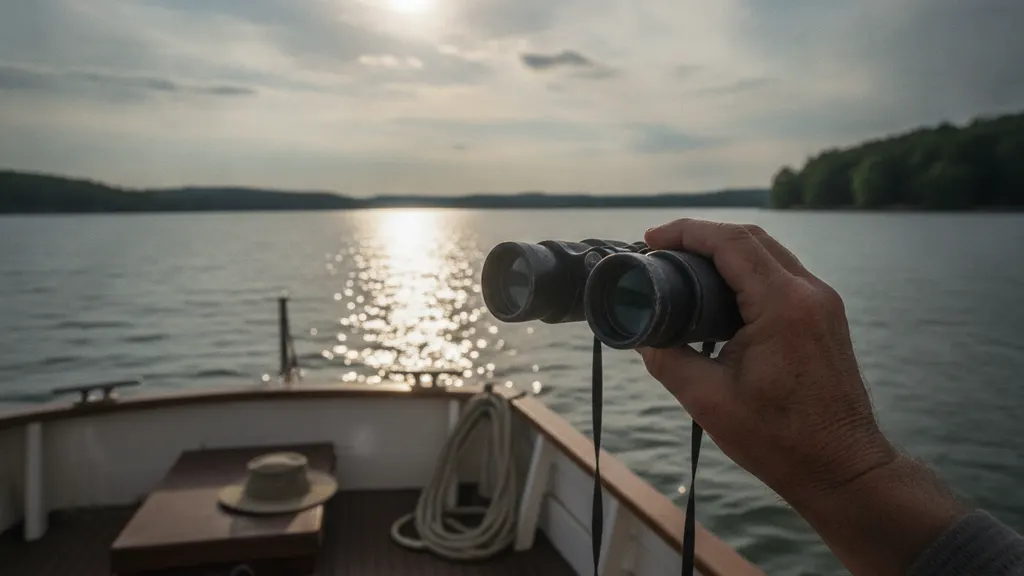
A shot list that works on a Lake Lanier photography charter
Most of a Lake Lanier photography charter breaks into four blocks: dock and departure frames while the boat is still, open water portraits once we settle on a heading, wide shoreline landscapes with the sails in the picture, and detail shots of hands, rings, lines, and winches on the sail back in.
Portraits at the bow and stern
The bow gives you clean water behind the subject and nothing else competing. Shoot from the cabin top with a short telephoto and the far shoreline compresses into a soft band. The stern works better for seated portraits and for anything involving the wheel, and it is where the boat's own lines and hardware show up in frame. Keep one hand free. A photographer who is bracing is a photographer who is not composing.
Landscapes with the shoreline in frame
Give yourself a backdrop inventory before you leave the slip. The Corps counts 57 park areas and 10 marinas around the lake, which is 67 public access points you can shoot toward from the water. Parks give you beaches, bluffs, and docks. Marinas give you masts, gangways, and reflections at dusk. If you do not know the shoreline yet, Explore Georgia's Lake Lanier travel listings are a reasonable starting map.
Group photos without a crowd
Groups are the hardest part of any boat shoot, because a cockpit seats fewer people than a lawn. Split ten guests into two rows with the sails behind them, or stage them along the side deck with open water beyond. For proposals, the surprise holds together better with one hidden shooter at the stern than with a chase boat, and our guide to proposing on a sailboat on Lake Lanier covers the timing.
Working with the captain during a Lake Lanier photography charter
Tell me the shot, not the maneuver. If you say you want the sun behind the couple with the shoreline soft behind them, I can pick the heading, the tack, and the spot. If you want a course change mid sail, give me a minute of warning, because a boom that swings on cue is a boom nobody gets hit by.
Water level changes the plan more than guests expect. Releases at Buford Dam move the lake up and down through the season, which changes how much clay bank shows under the treeline and whether a given cove is worth entering at all. I wrote up how releases reshape a sail in our guide to Lake Lanier water levels and boating, and the Lake Lanier Association posts shoreline conditions and debris notes after heavy rain. Read both a week before a Lake Lanier photography charter.
Agree on three calls before we leave the dock: a word that means hold this heading, a word that means I need stillness, and a hand signal for ready to come about. I check the wind forecast from the National Weather Service forecast office in Peachtree City the morning of every sail, because fifteen knots makes for dramatic sails and difficult focus.
Frequently asked questions
Can you really do a photo shoot on a sailboat on Lake Lanier?
Yes, and it is one of the more common reasons people book. A Lake Lanier photography charter is a private sail where the route and the clock are set around your shots instead of around a cruise. The boat is both the set and the vehicle, so you can move from a sheltered cove to open water in minutes. The lake is big enough to make that practical: the U.S. Army Corps of Engineers reports more than 39,000 surface acres at full level, which means there is nearly always a quiet stretch of water within reach of Aqualand Marina.
What time of day gives the best Lake Lanier sailboat photos?
The last two hours before sunset, with the first ninety minutes after sunrise a close second. Low sun gives you side light and warm color, and the surface is usually calmer at both ends of the day than it is at two in the afternoon. The exact window shifts a lot across the year, so check your date against sunrise and sunset data published by NOAA and work backward. Leave the dock about two and a half hours before sunset if you want dock frames, open water portraits, and the sunset itself in one sail.
How long should a Lake Lanier photography charter be?
Plan three to four hours for a full set of images. Thirty minutes goes to boarding and dock frames at Aqualand Marina, Dock Zk, about an hour to reaching the shoreline you picked, and the rest to shooting while the light changes. A two hour sail works for one look in one place. US Sailing, the national governing body for the sport, publishes beginner material explaining why a sailboat covers less ground per hour than a powerboat, which is the main reason photo sails run longer than people first guess.
Will the boat hold still for photos?
Not completely, and that usually helps. A sailboat under way is steadier than a powerboat sitting in wakes, because the sails damp the roll. If you need a near still frame I can head up into the wind or drop into a protected cove near Flowery Branch, where the water tends to stay flat. The City of Flowery Branch publishes park and launch information for that end of the lake. Tell me the shot and I will give you the heading that holds it, which is most of what a Lake Lanier photography charter is for.
What should we wear for photos on a sailboat?
Soft, solid fabrics in mid tones, flat non marking soles, and layers. Wind moves hair and fabric, which reads well in motion and badly in a static pose, so bring one piece that holds its shape. Skip white head to toe, because the sails are already white and your subject disappears into them. Sunglasses off for portraits, hat on between frames. If you are building a wider Atlanta trip around the shoot, the Atlanta Convention and Visitors Bureau lists seasonal weather expectations worth reading before you pack a bag.
What happens if the weather turns on the day of my shoot?
We watch it and we move. Summer afternoon thunderstorms over the lake build fast, and I will not take guests out under lightning for a photograph. The National Weather Service is the authority I follow, and the call usually comes a few hours ahead rather than at the dock. Most shoots shift earlier in the day or move to another date, and the light after a front clears is often better than the light we lost. Hold one backup date in mind when you book, especially between June and August.